
Your deployment pipeline has problems you haven't found yet.
DevOps Station digs into your CI/CD setup and surfaces the friction points your team stopped noticing. Slow builds. Ghost steps. Config drift. We find them, document them, and show you exactly what to fix.
- CI/CD pipeline configuration review
- Build time bottleneck identification
- Manual handoff step mapping
- Environment configuration drift analysis
- Deployment failure pattern review
What slows teams down, specifically
Most pipeline problems aren't dramatic. They accumulate quietly over months until your team just accepts them as normal.
Build Time Inflation
Builds that used to take four minutes now take twenty-two. Nobody changed anything major, but small additions stacked up. Redundant test runs. Uncached dependency fetches. Sequential steps that could run in parallel. We map exactly where the time goes.
Hidden Manual Steps
That Slack message to ops before deploying to staging. The spreadsheet someone updates after each release. Manual steps hide in plain sight because teams built them before automation was an option.
Config Drift
Production, staging, and dev have drifted apart. Nobody planned it. It just happened. And now you have bugs that only appear in production because the environments aren't actually equivalent.
Deployment Anxiety
When your team avoids deploying on Fridays, or needs a specific person present during releases, that's a signal. Not a character flaw. A pipeline design problem.
Observability Gaps
You can't fix what you can't see. Many pipelines produce no meaningful signal about where they spend time or why they fail. We look at what your pipeline tells you about itself, and what it doesn't.
Good observability turns reactive firefighting into proactive maintenance.
Written Findings
Every audit produces a structured document your team can actually use. Not a slide deck with vague recommendations. Specific findings, reproducible examples, and prioritized suggestions.
Before the audit vs. after
What changes when someone actually looks at your pipeline with fresh eyes.
Before the Audit
- Builds take longer than anyone remembers why
- Deployment steps lived in someone's head
- Environments diverged at some unknown point
- Failures investigated case-by-case with no pattern visibility
- Team works around pipeline problems instead of fixing them
After the Audit
- Specific build phases identified and documented
- Every manual step mapped and flagged for automation review
- Environment differences catalogued with root causes
- Failure categories grouped with contributing factors identified
- Prioritized findings your team can act on in order
The work looks like this
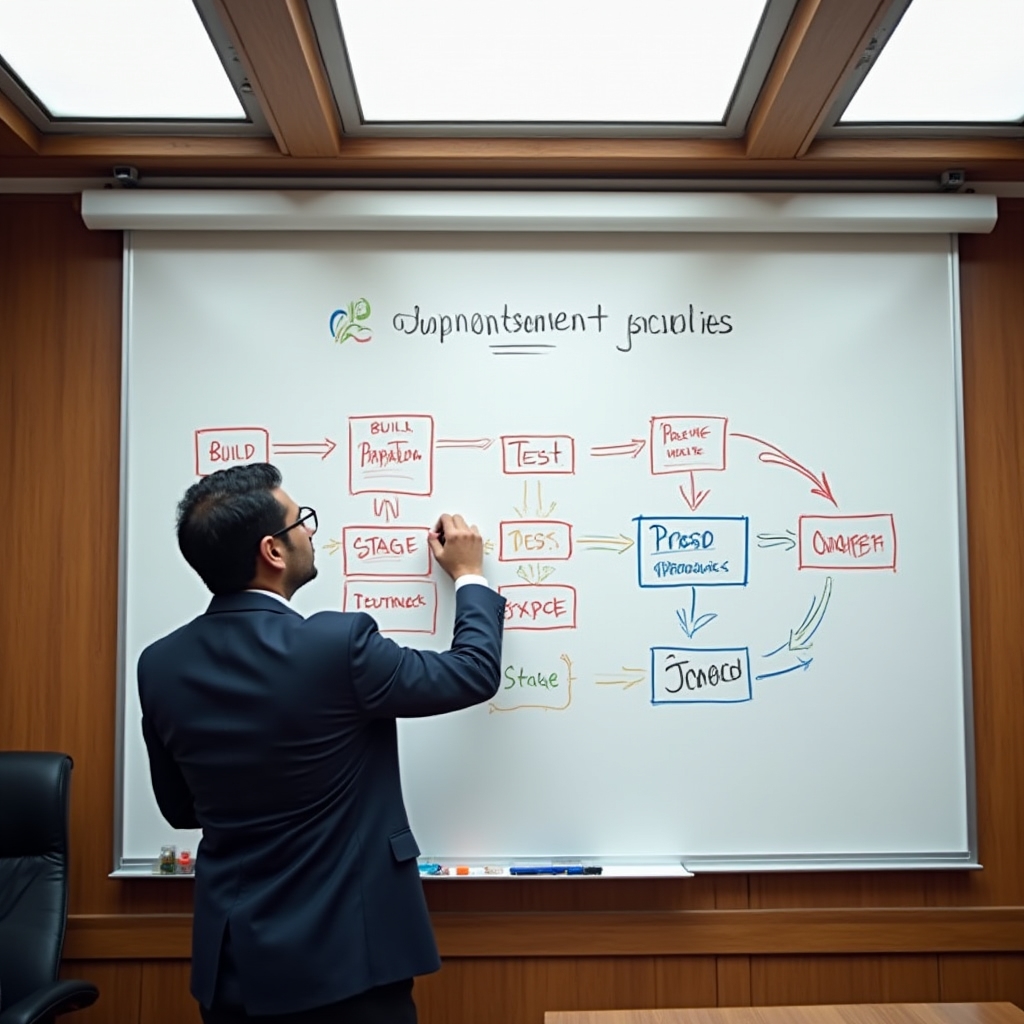
Pipeline audits involve real teams, real code, and real documentation. Not slideware.




Not for everyone. Probably for you.
DevOps Station works with engineering teams that are shipping regularly and starting to feel the friction. Teams where the pipeline was set up under pressure and never revisited. Teams where one person understands how deployments actually work.
If your deploys are reliable and fast and everyone understands them, you don't need us. If that sentence made you laugh a little, keep reading.
See Who We Work With
Ready to actually look at your pipeline?
The first step is a conversation. Tell us about your stack, your team size, and the deployment friction you're experiencing. We'll let you know what an audit would involve for your specific setup.